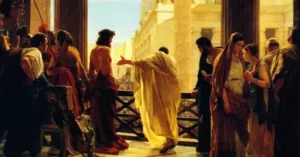
Discover the profound message of Jesus’ parable of the rich fool. Learn how to be truly rich toward God with timeless wisdom from Scripture and great theologians. Embrace eternal priorities over earthly wealth. Understanding the Setting and Context of Luke 12:13–15
1. Introduction: The Weight of a Parable
The parable of the rich fool, found in Luke 12:13–21, is one of Jesus’ most piercing and sobering teachings. Unlike many of His parables that begin with the phrase, “The kingdom of heaven is like…” this one is birthed out of a very real interruption during Jesus’ public teaching. The request that sparked this story wasn’t about theology, salvation, or eternal life—it was about money and inheritance. And yet, from that moment, Jesus opened a window into the eternal reality of life’s true meaning.
The King James Version records the opening moment like this:
“And one of the company said unto him, Master, speak to my brother, that he divide the inheritance with me. And he said unto him, Man, who made me a judge or a divider over you? And he said unto them, Take heed, and beware of covetousness: for a man’s life consisteth not in the abundance of the things which he possesseth.”
(Luke 12:13–15, KJV)
This short exchange is loaded with lessons. It exposes the human heart, our tendency to anchor our security in possessions, and Jesus’ clear warning that life is not defined by what we own.
2. The Cultural and Historical Background
To understand Jesus’ message in this parable, we must see it in its first-century Jewish context. Inheritance disputes were common in ancient Israel. According to Mosaic Law (see Deuteronomy 21:17), the eldest son was entitled to a double portion of the father’s estate. Sometimes siblings fought over the interpretation or fairness of the division. Rabbis often mediated these disputes, so it is not surprising that someone in the crowd sought Jesus’ intervention.
However, Jesus refuses the role of arbitrator. Why? Because His mission was not to settle temporary disputes but to point people toward eternal truths. By refusing, He revealed that His authority was about saving souls rather than sorting earthly fortunes. He shifted the focus from distribution of wealth to the dangers of loving wealth.
3. The Root Problem – Covetousness
Jesus immediately identifies the deeper issue: covetousness. This is not merely wanting more—it’s an unhealthy desire for what belongs to someone else, coupled with the belief that life is improved or defined by material gain.
The Bible consistently warns against covetousness:
- Exodus 20:17 – “Thou shalt not covet thy neighbour’s house… nor any thing that is thy neighbour’s.”
- Colossians 3:5 – “…covetousness, which is idolatry.”
Notice how Paul calls covetousness idolatry. It replaces God as the center of our trust and devotion, making possessions our ultimate hope.
In the parable’s context, the man’s request reveals a heart focused not on justice or family harmony, but on securing a larger portion of wealth. Jesus saw this and issued a command: “Take heed, and beware…” This double expression in Greek (ὁρᾶτε καὶ φυλάσσεσθε) shows urgency—watch closely and guard yourself continually against this spiritual disease.
4. The Value of a Life – Beyond Possessions
Jesus’ statement in verse 15 dismantles one of the most common illusions of humanity:
“…for a man’s life consisteth not in the abundance of the things which he possesseth.”
In other words, your worth, identity, and security are not measured by bank accounts, land deeds, or material assets. In the ancient world, this was radical thinking. Wealth was often seen as a sign of God’s blessing, while poverty was viewed as a curse. Yet Jesus declares that true life is not measured in barns, fields, or gold coins.
This principle is echoed throughout Scripture:
- Proverbs 11:4 – “Riches profit not in the day of wrath: but righteousness delivereth from death.”
- Ecclesiastes 5:10 – “He that loveth silver shall not be satisfied with silver; nor he that loveth abundance with increase: this is also vanity.”
Jesus reframes life’s value system from earthly accumulation to eternal preparation.
5. Practical Applications for Today
Even though this moment happened 2,000 years ago, the heart issue remains exactly the same in our modern world. People still define themselves by net worth, career success, luxury possessions, or social status. Jesus’ warning is as urgent today as it was then.
Here’s how we can apply this teaching practically:
- Examine Your Desires:Ask yourself—Am I more concerned with storing wealth than storing treasures in heaven? (See Matthew 6:19–21.)
- Guard Against Comparison:Much covetousness begins when we measure our lives against others. Social media has amplified this temptation by showcasing curated lifestyles. We must remember, “Godliness with contentment is great gain” (1 Timothy 6:6).
- Value Eternal Investments Over Temporal Gains:Every possession you own is temporary. One day, it will either decay, be stolen, or belong to someone else. But what you invest in the kingdom—faith, obedience, love—will endure forever.
- Avoid Redefining God’s Blessing as Materialism:Many equate prosperity with God’s approval, but Scripture shows faithful people often endured poverty (see Paul in Philippians 4:12, Jesus Himself in Luke 9:58).
6. Setting the Stage for the Parable
The brief conversation in verses 13–15 is not the parable itself—it’s the doorway to it. Jesus uses this moment to prepare the audience for a shocking story that will challenge their entire perspective on wealth, security, and the purpose of life.
This is important: the parable of the rich fool is not merely about greed—it’s about misplaced trust. The man in the story will make plans, count on his possessions, and assume a future that God never guaranteed. By setting up the context this way, Jesus ensures His audience will feel the weight of the coming lesson.
we will explore the parable itself—verse by verse—unpacking the rich fool’s mindset, his plans for “bigger barns,” and the spiritual tragedy of storing wealth without storing eternal riches.
Unpacking the Parable: The Rich Fool’s Story and Its Eternal Lessons
1. The Parable Unfolded: Luke 12:16–19
Jesus begins the parable after warning about covetousness and the true meaning of life:
“And he spake a parable unto them, saying, The ground of a certain rich man brought forth plentifully: And he thought within himself, saying, What shall I do, because I have no room where to bestow my fruits? And he said, This will I do: I will pull down my barns, and build greater; and there will I bestow all my fruits and my goods. And I will say to my soul, Soul, thou hast much goods laid up for many years; take thine ease, eat, drink, and be merry.”
(Luke 12:16–19, KJV)
2. The Rich Man’s Blessing and Boast
The man’s land yields abundantly, a clear blessing from God. Yet instead of gratitude and generosity, his heart turns inward. Notice the three main actions:
- Planning (v17): “What shall I do?”—he considers his options, but only for himself.
- Building Bigger Barns (v18): He plans to expand storage, a symbol of hoarding.
- Self-Indulgence (v19): “Eat, drink, and be merry”—he looks forward to carefree comfort, focusing on present pleasure.
This reveals a self-centered worldview where blessings are seen as personal property, not stewardship.
3. The Foolishness of Hoarding Earthly Wealth
Jesus calls this man a fool in the next verse:
“But God said unto him, Thou fool, this night thy soul shall be required of thee: then whose shall those things be, which thou hast provided?”
(Luke 12:20, KJV)
The word “fool” (Greek: μωρός, mōros) means one who lacks spiritual wisdom, blind to eternal realities.
Three Practical Reasons Why This Man Is a Fool:
- Ignoring the Fragility of LifeHe assumes many years ahead (“for many years”), but God reveals his life may end abruptly. James reminds us:
“Whereas ye know not what shall be on the morrow… For what is your life? It is even a vapour…”
(James 4:14, KJV)
No amount of wealth can guarantee tomorrow.
- False Security in PossessionsThe rich man’s security is in barns and goods. But Jesus warned earlier:
“A man’s life consisteth not in the abundance of the things which he possesseth.”
(Luke 12:15)
This man contradicts that truth by anchoring his soul’s peace in possessions.
- Lack of Eternal PerspectiveHe only plans for this life, never considering his soul’s fate. Jesus says:
“So is he that layeth up treasure for himself, and is not rich toward God.”
(Luke 12:21)
4. Practical Examples of the Fool’s Mentality in Today’s World
We can easily recognize this mindset in our culture:
- The Hoarder — People who accumulate possessions but never share or use them to bless others (James 5:1–3 warns about the misery of hoarders).
- The Workaholic — Those who work excessively to build wealth or status, neglecting family and spiritual health (Ecclesiastes 4:6 says, “Better is a handful with quietness”).
- The Debt Slave — Borrowing and spending beyond means, trusting in future income that may never come.
- The Materialist — Measuring self-worth by possessions, appearance, or lifestyle, ignoring God’s judgment.
5. The Spiritual Tragedy: When Earthly Wealth Becomes an Idol
The rich fool’s story warns against the idolatry of wealth. Covetousness replaces God at the center of life. Paul instructs:
“For the love of money is the root of all evil: which while some coveted after, they have erred from the faith…”
(1 Timothy 6:10)
Modern society often promotes wealth as the ultimate goal, but Scripture teaches the exact opposite:
- Matthew 6:24 – “No man can serve two masters… Ye cannot serve God and mammon.”
- Proverbs 23:4–5 – “Labour not to be rich… For riches certainly make themselves wings.”
6. How to Avoid the Rich Fool’s Mistakes
Here are practical steps to guard against the folly Jesus describes:
- Cultivate Contentment:Paul writes, “I have learned, in whatsoever state I am, therewith to be content” (Philippians 4:11). Contentment keeps covetousness at bay.
- Practice Generosity:Jesus says, “Give, and it shall be given unto you” (Luke 6:38). Generosity breaks the chains of greed and expands the heart.
- Focus on Eternal Investments:Store treasures in heaven by obeying God’s commands, loving others, and living righteously (Matthew 6:19–21).
- Remember Life’s Brevity:Regularly reflect on death and eternity. This humbles the heart and shifts priorities (Psalm 90:12).
- Seek God’s Wisdom:Ask God for wisdom to manage blessings well (James 1:5), recognizing that all we have is His gift.
7. Illustrative Story: A Modern Rich Fool
Consider the story of a wealthy businessman who accumulated vast wealth but was estranged from family and God. He built a mansion filled with treasures but lived in anxiety, fearing loss. When he suddenly passed away, his wealth was left to strangers while his soul was unprepared.
Contrast this with a believer who trusted God, gave generously, and invested in eternal purposes. Though not wealthy, his life bore fruit, and he was welcomed into heaven with joy.
8. The Heart of Jesus’ Message
Jesus wants His hearers—and us—to see beyond material comfort. The rich fool teaches that life is fragile and uncertain; it demands that we invest wisely, not just in things that perish, but in our soul’s eternal destiny.
The question remains: Are you rich toward God? Are your priorities aligned with His kingdom? Or do you place your hope in earthly treasures that perish?
How to Be Truly Rich Toward God: Biblical Principles for Eternal Wealth
1. Introduction: Shifting from Earthly to Eternal Riches
Jesus concluded the parable with a powerful admonition:
“So is he that layeth up treasure for himself, and is not rich toward God.”
(Luke 12:21, KJV)
The phrase “rich toward God” contrasts sharply with the rich fool’s self-centered hoarding. It invites believers to understand that true wealth is not measured by possessions but by a heart aligned with God’s purposes.
2. What Does it Mean to Be “Rich Toward God”?
To be rich toward God means to:
- Have a heart devoted to God (Matthew 6:33)
- Use earthly resources for heavenly purposes (Matthew 6:19–21)
- Cultivate generosity and care for the needy (Proverbs 19:17; Acts 20:35)
- Prioritize obedience to God over personal gain (Deuteronomy 8:18)
3. Biblical Foundations for Being Rich Toward God
a. Seek First the Kingdom of God
Jesus teaches:
“But seek ye first the kingdom of God, and his righteousness; and all these things shall be added unto you.”
(Matthew 6:33, KJV)
True riches come from placing God’s kingdom and righteousness above all else. This does not necessarily mean financial poverty but a spiritual priority.
b. Lay Up Treasures in Heaven
Jesus warns against earthly treasures:
“Lay not up for yourselves treasures upon earth… But lay up for yourselves treasures in heaven.”
(Matthew 6:19–20, KJV)
Heavenly treasures include:
- Acts of mercy and kindness
- Evangelism and soul-winning
- Living a holy, obedient life
- Sacrificial giving for God’s work
4. The Role of Stewardship
Being rich toward God includes faithful stewardship of the resources God entrusts to us.
- Parable of the Talents (Matthew 25:14–30) teaches us to invest and multiply what God gives.
- We are managers, not owners (Psalm 24:1).
Stewardship requires wisdom, responsibility, and a heart to glorify God.
5. Generosity as a Mark of True Wealth
The Bible associates generosity with blessing and true riches:
- Proverbs 11:24–25: “There is that scattereth, and yet increaseth; and there is that withholdeth more than is meet, but it tendeth to poverty. The liberal soul shall be made fat: and he that watereth shall be watered also himself.”
- 2 Corinthians 9:6–7 encourages cheerful giving, promising God’s abundant supply.
6. Trust in God Over Possessions
The rich fool trusted his barns, but believers are called to trust God:
- “Trust in the LORD with all thine heart; and lean not unto thine own understanding.”(Proverbs 3:5)
Faith looks beyond temporary wealth to eternal security.
7. Contentment and Peace in God
Paul’s testimony is instructive:
“I have learned, in whatsoever state I am, therewith to be content.”
(Philippians 4:11)
Contentment frees the heart from covetousness and anxiety, enabling peace regardless of financial status.
8. Practical Steps to Grow Rich Toward God
- Daily Surrender: Yield possessions and desires to God in prayer.
- Generous Living: Regularly give to those in need and support gospel work.
- Scripture Meditation: Reflect on God’s promises about provision and riches.
- Accountability: Have trusted brothers/sisters to counsel on financial decisions.
- Eternal Focus: Keep heaven’s eternal reward as your goal (2 Corinthians 4:18).
9. Examples from Scripture
- Abraham gave generously and trusted God for provision (Genesis 13:2, Hebrews 11:8–10).
- Job remained faithful and generous despite great wealth (Job 1:21).
- Zacchaeus repented and gave away half his possessions (Luke 19:8), showing a heart rich toward God.
- The Early Church shared everything in common and were praised by God (Acts 4:32–35).
10. The Eternal Perspective
The parable calls us to examine where we place our treasure. Earthly riches are fleeting, but heavenly riches endure forever.
“For where your treasure is, there will your heart be also.”
(Matthew 6:21)
By aligning our heart with God, we store treasures that moth and rust cannot destroy (Matthew 6:19).
11. The Warning Against Spiritual Poverty
The rich fool was spiritually poor despite earthly wealth. Being poor in spirit means recognizing our need for God.
Jesus said:
“Blessed are the poor in spirit: for theirs is the kingdom of heaven.”
(Matthew 5:3)
To be truly rich toward God is to:
- Trust God over money
- Use possessions to bless others
- Prioritize eternal values
- Cultivate contentment and generosity
- Live with an eternal perspective
This transformation begins in the heart and manifests in every aspect of life.
Guarding Your Heart Against the Love of Money: Practical Steps for a Godly Life
1. Introduction: The Danger of Loving Money
The parable of the rich fool is a stark warning against the love of money—not money itself, but the love of it, which can easily become idolatry. The Apostle Paul explains:
“For the love of money is the root of all evil: which while some coveted after, they have erred from the faith, and pierced themselves through with many sorrows.”
(1 Timothy 6:10, KJV)
This love ensnares many, causing spiritual ruin and separation from God. Jesus’ parable invites us to examine our hearts and implement practical measures to resist this temptation.
2. Recognizing the Root of Covetousness
Covetousness is more than just wanting; it is a heart condition where possessions rule over the soul. It often begins quietly and grows unnoticed. Scripture says:
“Keep thy heart with all diligence; for out of it are the issues of life.”
(Proverbs 4:23, KJV)
The heart is the source of life’s actions. Guarding it requires vigilance.
Practical example:
A believer notices increasing anxiety about financial security. Instead of trusting God, they obsess over savings and acquisitions. This is an early sign of covetousness creeping in.
3. Practical Steps to Guard the Heart
A. Daily Prayer for Contentment and Wisdom
Ask God for a contented heart and wisdom to manage resources rightly:
“If any of you lack wisdom, let him ask of God…”
(James 1:5, KJV)
Prayer aligns the heart with God’s will.
B. Regular Bible Study on God’s Provision
Meditate on verses like:
- “The young lions do lack, and suffer hunger: but they that seek the LORD shall not want any good thing.” (Psalm 34:10)
- “My God shall supply all your need according to his riches in glory by Christ Jesus.” (Philippians 4:19)
These promises combat fear of lack.
C. Practice Generosity as a Spiritual Discipline
Regular giving breaks the grip of materialism.
“It is more blessed to give than to receive.”
(Acts 20:35, KJV)
Start small if needed; generosity fosters a heart focused on others.
4. Cultivate Gratitude to Combat Greed
Gratitude redirects focus from what we lack to God’s abundant blessings.
“In every thing give thanks: for this is the will of God in Christ Jesus concerning you.”
(1 Thessalonians 5:18, KJV)
Keep a gratitude journal to note daily blessings.
5. Avoid the Pitfalls of Materialism in a Consumer Culture
Modern society constantly pushes messages of “more is better.” Media, advertisements, and peer pressure inflate desires.
Practical tip:
Set boundaries for spending. Before purchasing, ask:
- Do I need this?
- Will this add eternal value or just temporary pleasure?
- Am I acting out of contentment or craving?
6. Seek Accountability in Your Financial Life
Having trusted Christian friends or mentors to discuss finances helps maintain spiritual health.
“Iron sharpeneth iron; so a man sharpeneth the countenance of his friend.”
(Proverbs 27:17, KJV)
Accountability discourages secrecy and pride.
7. Embrace Simplicity and Stewardship
Living simply doesn’t mean poverty but choosing to avoid excess.
“Better is little with the fear of the LORD than great treasure and trouble therewith.”
(Proverbs 15:16, KJV)
Stewardship is managing all God gives with responsibility and joy.
8. Reflect Often on Eternity
The parable reminds us life is fleeting:
“For what is your life? It is even a vapour…”
(James 4:14, KJV)
Keep eternity before your eyes daily to prioritize rightly.
9. Real-Life Example: The Changed Steward
A Christian businessman shared how he struggled with greed and anxiety about money. Through prayer, scripture, and counsel, he learned to give generously and trust God’s provision. His heart changed from fear to faith, experiencing peace and joy despite financial ups and downs.
10. The Peace of Trusting God
When we guard our hearts and choose to be rich toward God, we experience His peace:
“And the peace of God, which passeth all understanding, shall keep your hearts and minds through Christ Jesus.”
(Philippians 4:7, KJV)
This peace guards us against the destructive love of money.
Summary and Challenge
Jesus’ parable warns us that earthly wealth can deceive and destroy if not governed by godly wisdom. We must guard our hearts with prayer, scripture, generosity, accountability, gratitude, and an eternal perspective.
Challenge: Today, examine your heart honestly. Are you storing treasures for yourself or for God? Begin practical steps to align your life with God’s kingdom.
Living with Eternal Urgency: Preparing Your Soul for the Day God Requires It
1. The Reality of Our Mortality
The rich fool’s sudden death in the parable starkly reminds us that life is fragile and uncertain. Jesus declares:
“This night thy soul shall be required of thee.”
(Luke 12:20, KJV)
No one knows the hour of their departure from this life. The certainty of death calls for urgent spiritual preparation.
“It is appointed unto men once to die, but after this the judgment.”
(Hebrews 9:27, KJV)
2. What Does It Mean to Have Your Soul “Required”?
To have your soul required means that God will call you to account for how you have lived. This is the moment your earthly life ends, and your eternal destiny is decided.
The parable warns us that earthly possessions cannot accompany us beyond the grave:
“Then whose shall those things be, which thou hast provided?”
(Luke 12:20, KJV)
No amount of wealth or earthly security can satisfy or secure the soul at death.
3. The Importance of Being Spiritually Prepared
The parable’s warning is clear: the foolish rich man was unprepared spiritually. His wealth was worthless on the day his soul was demanded.
We must cultivate a readiness for our final day:
- Live in repentance daily (1 John 1:9)
- Walk in obedience to God’s commands (John 14:15)
- Cultivate a vibrant relationship with Jesus Christ (John 10:27)
- Share the gospel and produce fruit (Matthew 28:19–20; John 15:8)
4. Practical Disciplines to Cultivate Eternal Readiness
A. Daily Examination and Repentance
Paul exhorts:
“Examine yourselves, whether ye be in the faith; prove your own selves.”
(2 Corinthians 13:5, KJV)
Self-examination helps keep us humble and ready.
B. Prayer and Seeking God’s Guidance
Ask God to prepare your heart and strengthen your faith:
“Create in me a clean heart, O God; and renew a right spirit within me.”
(Psalm 51:10, KJV)
C. Use Your Time Wisely
The Bible says:
“Redeeming the time, because the days are evil.”
(Ephesians 5:16, KJV)
Every day is an opportunity to live for God.
5. The Eternal Urgency in Light of the Judgment
Jesus teaches that we will all stand before God’s judgment seat:
“So then every one of us shall give account of himself to God.”
(Romans 14:12, KJV)
The rich fool’s fate is a warning to prioritize what lasts.
6. Biblical Examples of Eternal Readiness
- Noah warned his generation of coming judgment and built the ark (Hebrews 11:7).
- Lot fled Sodom, prepared for judgment (Genesis 19:15–17).
- Paul lived as one ready to meet Christ at any moment (Philippians 1:21–23).
7. Real-Life Application: Living Each Day as Your Last
Remembering death motivates godly living.
Example:
A believer facing terminal illness expressed peace because they had prepared spiritually for years. Their treasure was not in earthly things but in God’s promises.
8. Encouragement for the Present
God’s grace enables us to be ready:
“Therefore be ye also ready: for in such an hour as ye think not the Son of man cometh.”
(Matthew 24:44, KJV)
Let us embrace the call to readiness with hope and faith.
The parable calls for eternal urgency, reminding us that life’s end can come suddenly. Earthly wealth cannot save us; only being rich toward God by faith, repentance, and obedience prepares the soul.
Wisdom from Great Theologians & Lasting Spiritual Lessons
1. Reflecting on the Parable: A Call to Spiritual Maturity
Jesus’ parable of the rich fool is timeless. It exposes the futility of earthly wealth and calls believers to spiritual maturity—being rich toward God by prioritizing eternal treasures over temporal possessions.
Theologians throughout history have meditated deeply on this parable, providing insights to help believers guard their hearts.
2. Wisdom from Great Theologians
John Calvin (1509–1564), the great Reformer, emphasized that:
“The riches of the world are vain and fleeting, and those who trust in them prepare their hearts for disappointment and eternal loss.”
Calvin urged believers to fix their hope on God’s promises, not on uncertain riches.
Martin Luther (1483–1546) taught:
“The rich fool’s story is a solemn warning that to love money is to fall into spiritual poverty, losing the true riches of God’s grace.”
Luther emphasized that faith and trust in God alone bring lasting peace.
Charles Spurgeon (1834–1892), the Prince of Preachers, remarked:
“Many are rich in gold but poor in grace. The soul’s true wealth is found only in Christ, and earthly treasures perish.”
Spurgeon called Christians to live generously and humbly, storing treasures in heaven.
Dietrich Bonhoeffer (1906–1945), a modern martyr, said:
“Our possessions must never possess us; the gospel calls us to freedom from greed and selfishness.”
Bonhoeffer’s life exemplified sacrifice and faithful trust in God above all.
3. The Enduring Message: Practical Spiritual Lessons
From these theologians and Scripture, we glean these lessons:
- Do Not Trust in Uncertain Riches
“Trust in the LORD with all thine heart…” (Proverbs 3:5)
- Practice Generosity and Self-Denial
“Sell that ye have, and give alms…” (Luke 12:33)
- Live with Eternal Perspective
“For where your treasure is, there will your heart be also.” (Matthew 6:21)
- Guard Against the Love of Money
“Charge them that are rich… not to trust in uncertain riches.” (1 Timothy 6:17)
4. Spiritual Disciplines for Lasting Riches Toward God
- Regular Self-Examination: Paul urged, “Examine yourselves…” (2 Corinthians 13:5)
- Prayer for Humility and Contentment (Philippians 4:6–7)
- Study of God’s Word to Renew the Mind (Romans 12:2)
- Active Generosity and Service (Acts 20:35)
- Meditation on Eternity and Judgment (Hebrews 9:27)
5. Personal Stories of Transformation
Countless believers throughout history and today have been transformed by this parable’s truth. For example:
- A wealthy merchant repented of greed, sold his possessions, and used his wealth to support missionaries and care for the poor, becoming a beacon of God’s grace.
- A modern-day family chose simplicity over luxury, trusting God daily and experiencing deep joy and peace, illustrating the principle of being rich toward God.
6. Theological Reflection: The Gospel’s Challenge to Materialism
The gospel of Jesus Christ challenges every believer to live counter-culturally. While the world seeks to amass possessions, Christians are called to lay up treasures in heaven.
“For ye know the grace of our Lord Jesus Christ… that, though he was rich, yet for your sakes he became poor…”
(2 Corinthians 8:9, KJV)
Christ’s example of self-emptying love defines true riches.
7. Final Exhortation from Scripture
“Beware lest any man spoil you through philosophy and vain deceit… and not after Christ.”
(Colossians 2:8, KJV)
Guard your heart against worldly philosophies that exalt riches above God.
Conclusion: The Parable’s Lasting Impact
The parable of the rich fool is a divine invitation to live wisely, humbly, and eternally minded. It challenges us to:
- Examine our hearts
- Realign our priorities
- Trust God fully
- Live generously and joyfully
- Prepare daily for eternity
- How does the parable challenge your current view of wealth and possessions?
- In what ways can you cultivate a heart rich toward God this week?
- What practical steps will help guard you against the love of money?
If this teaching has challenged or encouraged you, please share it with others who need to hear God’s call. Reflect daily on your treasures and commit to living for eternity. Engage with a community of believers to grow in faith and stewardship.
Frequently Asked Questions (FAQ)
Q: Does the Bible say money is evil?
A: No, the Bible says “the love of money is the root of all evil” (1 Timothy 6:10). Money itself is neutral; it’s our attitude toward it that matters.
Q: How can I be content with less?
A: Contentment comes from trusting God’s provision and seeking His kingdom first (Philippians 4:11–13, Matthew 6:33).
Q: What if I have wealth—how can I honor God?
A: Use your wealth generously to bless others, support God’s work, and live humbly (Acts 20:35, Luke 12:33).
May the Lord grant you wisdom to guard your heart and the grace to live richly toward Him. May you find peace in trusting God’s provision and joy in eternal treasures.
“Grace be with all them that love our Lord Jesus Christ in sincerity. Amen.” (Ephesians 6:24, KJV)