Discover the inspiring life of John Wesley, founder of Methodism, from childhood to nationwide revival. Learn practical lessons for faith, service, and spiritual transformation that continue to impact believers today.
John Wesley – Early Life and Spiritual Formation
| Aspect | Details |
|---|---|
| Full Name | John Wesley |
| Birth Date | June 17, 1703 |
| Birth Place | Epworth, Lincolnshire, England |
| Parents | Samuel Wesley (father, Anglican minister), Susanna Wesley (mother, devout Christian) |
| Siblings | 18 children in the Wesley family (John was the 15th child) |
| Significant Childhood Event | Survived a house fire at age 6, narrowly rescued before roof collapse — considered a providential event foreshadowing his future role in spiritual rescue |
| Early Spiritual Environment | Raised in a deeply devout household; mother emphasized Scripture, daily prayer, and personal holiness; household known as “The Mother of Methodism” because of her influence |
| Education | Attended Charterhouse School briefly; enrolled at Christ Church, Oxford at age 18 |
| Early Spiritual Practice | Formed the “Holy Club” at Oxford with fellow students, practicing methodical prayer, fasting, Scripture study, and works of charity; gained the nickname “Methodists” for their disciplined approach |
| Spiritual Challenge | Despite religious upbringing, experienced an inner hunger and lack of assurance of salvation — aware of knowing about God, but not personally experiencing Him |
| Personal Traits | Early demonstrated discipline, deep curiosity about spiritual matters, conscientiousness, and commitment to moral living; displayed seriousness and devotion uncommon for youth |
Early Reflections and Spiritual Awakening
John Wesley’s childhood and early youth were formative not only for his character but for the future global impact of his ministry. He experienced:
- Providential Protection – The house fire incident was a dramatic reminder of God’s protective hand and ignited a lifelong awareness of divine providence.
- Deep Maternal Influence – Susanna Wesley’s spiritual guidance created a framework for discipline, prayer, and Scripture meditation that shaped John’s priorities.
- The Quest for Assurance – Despite discipline and religious knowledge, John wrestled with understanding true salvation — an inner longing that would later fuel his evangelical zeal.
- Preparation Through Methodical Living – The “Holy Club” introduced structured spiritual practices, teaching John the power of intentionality, accountability, and service in the Christian life.
“The fire that shapes a man’s life is often lit quietly, in the hidden chambers of prayer and devotion.”
Wesley’s early years were thus not merely a timeline of events, but a tapestry of experiences through which God prepared a vessel for the evangelical revival that would shake England and beyond. These foundations of discipline, personal holiness, and spiritual yearning were crucial; without them, Methodism might have remained an idea, not a movement.
Key Insights for Modern Believers
- Spiritual Discipline Precedes Ministry Impact – Methodical devotion prepares the heart for later public influence.
- Early Trials Are Formative – Providential events in childhood shape courage, dependence, and faith.
- Parental Influence Matters – Spiritual habits modeled at home plant seeds that can flourish into national revival.
- Assurance of Salvation Is Transformative – The inner struggle to know God personally fuels a lifelong passion for holiness and evangelism.
Oxford Years and the Formation of the Holy Club – Seeds of Evangelical Revival
| Aspect | Details |
|---|---|
| Age at Oxford Enrollment | 18 years old (1720) |
| College | Christ Church, University of Oxford |
| Early Influences | Exposure to classical theology, scholastic thought, and the Anglican Church’s intellectual tradition; encounters with devout mentors and like-minded peers |
| Formation of the Holy Club | John Wesley and a group of students formed a disciplined fellowship emphasizing: • Daily Scripture reading • Prayer and intercession • Fasting and self-denial • Acts of charity and service |
| Nickname Given | “Methodists” — given mockingly by fellow students because of their systematic approach to spiritual discipline |
| Spiritual Focus | Personal holiness, accountability, and experiential knowledge of God, not merely intellectual learning |
| Challenges Faced | Criticism and ridicule from peers; internal struggle with assurance of salvation; tension between rigorous discipline and true spiritual joy |
| Outcome | Developed habits of persistent prayer, personal devotion, and methodical study that would underpin his future ministry |
Early Spiritual Insights at Oxford
During his Oxford years, John Wesley began to internalize a principle that would define his ministry for life: spiritual transformation begins in the individual heart before it spreads to society. The Holy Club was not designed to impress others; it was a laboratory for sanctification. Members disciplined themselves in prayer, Scripture meditation, fasting, and acts of mercy. These habits were foundational for Wesley’s understanding that faith without works is dead, but that works must flow out of intimate relationship with Christ, not merely obligation.
- Prayer as Lifeline: Wesley spent hours in prayer, believing that personal revival precedes public revival.
- Fasting and Self-Denial: These practices cultivated spiritual sensitivity, helping him discern God’s voice above worldly distractions.
- Service as Faith in Action: Helping the poor and engaging in charitable works trained his heart to see Christ in every human being.
“True religion begins not in public display, but in hidden devotion and persistent obedience.”
Oxford Challenges and Growth
Even in an environment rich with spiritual discipline, Wesley faced internal and external opposition:
- Peer Criticism: Students mocked him and the Holy Club, highlighting the difficulty of standing faithfully in a secularizing academic environment.
- Assurance of Salvation: Despite diligent practices, he felt an inner void, realizing that discipline alone cannot create true faith.
- Balancing Knowledge and Experience: Oxford taught him theology intellectually, but Wesley learned that true spiritual power comes from living and experiencing God, not memorizing doctrines.
These struggles were vital: they prepared him for the spiritual awakening he would later encounter in America and England. The discipline he cultivated became the foundation for a ministry that emphasized personal holiness, scriptural preaching, and evangelistic zeal.
Key Takeaways for Modern Believers
- Discipline Without Intimacy Is Incomplete: Structured prayer, fasting, and study must flow from a heart that truly seeks God.
- Peer Pressure Will Come, But Faith Must Remain: Wesley’s early ridicule shows that standing for holiness often invites criticism, yet perseverance strengthens character.
- Personal Revival Precedes Public Impact: Transformation in the heart equips one to minister effectively to the world.
- Community Shapes Spiritual Growth: The Holy Club demonstrates the power of accountability, shared devotion, and mutual encouragement in faith journeys.
Spiritual Awakening and the Moravian Influence – The Birth of Evangelical Zeal
John Wesley’s journey toward becoming the founder of Methodism was not a straight path of success or natural talent. It was a path of spiritual awakening, intense introspection, and personal encounter with the living Christ. While Oxford provided discipline and knowledge, it did not provide the assurance of salvation or the inner fire that would ignite a worldwide revival. This awakening began in two pivotal experiences: his mission to Georgia and his encounter with the Moravians.
1. Mission to Georgia: Lessons in Dependence on God
In 1735, Wesley was appointed to serve as a missionary in the colony of Georgia, North America. His goal was to bring spiritual guidance and the Gospel to settlers and Indigenous people. Yet, the mission was fraught with disappointment:
- He faced cultural misunderstandings, opposition, and isolation.
- Many of his efforts to convert and teach met with apparent failure.
- The mission revealed the limitations of human effort without spiritual power.
This experience humbled Wesley profoundly. He realized that knowledge, zeal, and methodical discipline alone cannot produce genuine revival or personal assurance. Human efforts, no matter how meticulous, cannot replace the transformative power of God’s Spirit.
“I had all the zeal in the world, but it was like a fire without fuel — burning without warmth, visible but lifeless.”
2. Moravian Influence: The Secret of Peace
On his return journey from Georgia, Wesley encountered Moravian Christians who demonstrated peace and joy in Christ, even amidst trials. These devout believers were calm during storms at sea and unshakable in faith — their lives radiated assurance and deep trust in God. Wesley observed:
- True faith is not emotionally dramatic, but quiet, steady, and rooted in God’s promises.
- Assurance of salvation comes from knowing Christ personally, not merely performing religious duties.
- Community and shared devotion strengthen spiritual resilience.
This encounter marked the beginning of a profound transformation in Wesley’s heart. He saw that discipline plus divine grace is the formula for spiritual vitality.
3. Aldersgate Experience: The Heart Truly Ignited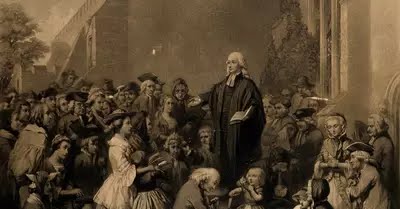
On May 24, 1738, Wesley attended a meeting in Aldersgate Street, London, that would forever change his life. While listening to a reading from Martin Luther’s preface to the Epistle to the Romans, he experienced what he described as “the heart strangely warmed.” In that moment:
- He felt the assurance of God’s forgiveness.
- His fear and uncertainty about salvation vanished.
- He experienced a personal encounter with Christ, igniting his evangelical zeal.
- Wesley realized that salvation was not human effort but divine grace, received personally and powerfully.
“I felt my heart strangely warmed. I felt I did trust in Christ alone for salvation, and an assurance was given me that He had taken away my sins, even mine.”
This was the spiritual awakening that turned a disciplined scholar into a global revivalist, determined to spread the message of personal salvation and holiness.
4. The Birth of Evangelical Zeal
Following Aldersgate, Wesley:
- Preached with renewed vigor, emphasizing personal faith and assurance of salvation.
- Began organizing field preaching and small groups, which became the Methodist movement.
- Focused on practical holiness, social service, and disciplined Christian living, blending Moravian spiritual insight with Anglican order.
- Traveled tirelessly, reaching cities, villages, and rural areas, preaching to thousands in open-air gatherings.
This period illustrates a key principle for all believers: transformation of the heart is the catalyst for transformational ministry. Knowledge alone is insufficient; only a heart fully captured by grace can produce true revival.
5. Key Lessons for Today
| Lesson | Practical Insight |
|---|---|
| Dependence on God | Human effort without God’s Spirit is limited |
| Assurance of Salvation | True peace comes from personal trust in Christ, not rituals |
| Community Impact | Fellowship and example strengthen faith and courage |
| Revival Begins Within | Personal heart transformation precedes public impact |
| Persistent Evangelism | True zeal flows from love for God, not desire for recognition |
Reflection for Modern Believers
- Are we relying on discipline or on Christ?
- Do we have the assurance of salvation, or do we merely perform religious acts?
- How can we experience a personal awakening like Wesley’s Aldersgate moment in our own lives?
- Are our ministries heart-driven, or are they just structured programs?
John Wesley’s awakening reminds us that God calls prepared hearts, but He also transforms them personally, creating a life of eternal impact. His Moravian encounters and Aldersgate experience teach that revival is not born of method alone, but of the Spirit igniting the soul.
Wesley’s Early Ministry and Practical Evangelical Work – Bringing Revival to the Streets
After his spiritual awakening at Aldersgate, John Wesley emerged as a man on fire for God. No longer content with private devotion or small circles of believers, he felt compelled to take the Gospel to every possible avenue of human need, blending personal holiness with practical service. This period demonstrates how revival is not merely spiritual theory, but lived practice.
1. Field Preaching: Reaching Beyond the Church Walls
Wesley realized that many were spiritually hungry but unreachable by traditional churches. Anglican pulpits were often closed to him for preaching to the masses, so he took his message to the fields, marketplaces, and open spaces:
- Open-air sermons: Thousands would gather in town squares and country fields to hear him preach about sin, grace, and salvation.
- Accessible language: He simplified theology, making the Gospel understandable to ordinary people, not just scholars.
- Personal stories and illustrations: He often drew on real-life examples, helping listeners relate their lives to God’s promises.
“God does not require buildings; He requires hearts. When hearts are open, the streets become His pulpit.”
2. Small Groups: The Foundation of Methodism
Recognizing that preaching alone could not sustain spiritual growth, Wesley established “class meetings” — small groups that met weekly for:
- Mutual accountability in holiness
- Prayer and Scripture study
- Confession and spiritual encouragement
- Practical charity and service in their communities
These groups became the engine of the Methodist movement, ensuring that revival was not just emotional experience, but transformed daily living.
3. Social Service and Holiness in Action
Wesley believed that faith without works is dead, and he actively encouraged believers to:
- Care for the poor, sick, and marginalized
- Promote education and literacy
- Advocate for social justice and moral integrity
- Live disciplined lives marked by personal holiness
His ministry was therefore holistic, addressing both the spiritual and practical needs of society.
4. Challenges and Perseverance
Despite early success, Wesley faced criticism, opposition, and personal exhaustion:
- Anglican clergy often opposed his open-air preaching
- Local authorities sometimes tried to silence him
- Harsh travel and relentless preaching tested his physical limits
Yet he persevered, guided by his conviction that God’s mission is more important than personal comfort.
5. Key Lessons for Today
| Principle | Practical Application |
|---|---|
| Go where the people are | Preach the Gospel in places where people naturally gather |
| Build small groups | Encourage community and accountability for growth |
| Integrate service with faith | Help others practically as an expression of spiritual love |
| Persist despite opposition | Trust God to sustain the mission, not human approval |
| Live what you preach | Personal holiness is the foundation of public ministry |
Reflection for Modern Believers
- Are we limiting God’s work to our comfort zones?
- Are our small groups or communities growing spiritually or merely socially?
- How can we combine practical service with evangelism today?
- Does our life reflect holiness as a natural outflow of revival?
Wesley’s early ministry teaches that revival is practical, disciplined, and deeply relational. It is not simply preaching or knowledge, but living faith that transforms communities.
Nationwide Revival and Transformational Ministry – John Wesley’s Legacy in Action
After his Aldersgate experience and early ministry efforts, John Wesley’s work began to expand beyond Oxford and London. His ministry became a movement, touching towns, villages, and rural communities across England, and eventually inspiring revival across the Atlantic. This period illustrates not only the practical application of spiritual principles, but also the transformational power of living faith in action.
1. Field Preaching Across England
Wesley traveled thousands of miles on horseback, preaching to crowds in open fields, marketplaces, and town squares. Some key highlights:
- Preaching to thousands: Estimates suggest Wesley preached more than 40,000 sermons in his lifetime.
- Accessible message: He emphasized personal salvation, assurance of grace, and holy living, breaking complex theology into relatable truths.
- Inclusivity: His audiences included poor laborers, aristocrats, and everyone in between. No social barrier could stop the message of God’s grace.
“The field became the church, and the crowd became the congregation. God’s Word does not require walls.”
2. Personal Stories of Transformation
Numerous individuals experienced radical life change under Wesley’s ministry. For instance:
- Mary Fletcher: Once timid and socially constrained, she became a powerful preacher and spiritual leader under Wesley’s guidance.
- John Nelson: A former soldier and public sinner, transformed through Wesley’s preaching, went on to lead small groups and support charitable works.
- Rural families: Entire villages reported moral and spiritual renewal, as Wesley’s preaching inspired practical changes like sobriety, daily prayer, and charitable giving.
These stories illustrate a principle still true today: revival begins in individual hearts but ripples outward into families, communities, and nations.
3. Overcoming Challenges
Despite widespread impact, Wesley’s ministry faced immense opposition and difficulty:
- Clergy criticism: Many Anglican leaders opposed his unconventional preaching.
- Legal and social resistance: Authorities often tried to silence open-air gatherings.
- Physical exhaustion: Constant travel, preaching, and administration tested Wesley’s stamina.
Yet Wesley persevered, relying not on human approval but on faithful obedience to God’s call.
4. Systematic Approach: Methodism as a Movement
Wesley’s genius was not just in preaching, but in systematizing revival through:
| Component | Purpose |
|---|---|
| Class Meetings | Small group accountability and discipleship |
| Field Preaching | Reaching populations outside formal churches |
| Lay Leadership | Training ordinary people to lead and teach |
| Practical Charity | Demonstrating faith through action |
| Structured Spiritual Discipline | Ensuring revival was sustainable and not merely emotional |
This systematic approach ensured that revival was organized, repeatable, and sustainable, not just a momentary emotional surge.
5. Lessons for Modern Believers
- Revival is heart-driven, not platform-driven.
- Transformation is both personal and communal.
- Spiritual leadership involves discipline, planning, and practical service.
- Opposition is part of faithful ministry; perseverance is non-negotiable.
- True faith changes lives tangibly, not just spiritually.
Reflection Questions
- How can we apply Wesley’s systematic approach to revival in our own communities?
- Are we prioritizing practical ministry alongside spiritual teaching?
- Do we allow opposition or criticism to hinder obedience to God?
- In what ways can personal transformation influence families and neighborhoods today?
John Wesley’s nationwide revival demonstrates that true ministry is relational, practical, disciplined, and Spirit-led. His legacy continues to challenge believers: revival is not just preaching—it is a lifestyle that transforms hearts, homes, and nations.
John Wesley’s life teaches a profound truth: God prepares ordinary hearts to accomplish extraordinary revival. From his early childhood in Epworth, through the disciplined Oxford years, the trials in Georgia, the heart-warming experience at Aldersgate, and his tireless ministry across England, Wesley’s story exemplifies how faith, discipline, grace, and obedience combine to transform lives and societies.
Wesley’s biography is more than historical detail—it is a blueprint for modern believers:
- Preparation is Key: God often works in hidden ways before revealing the magnitude of our calling.
- Heart Transformation Precedes Ministry Impact: Personal assurance, love for God, and holiness are foundational.
- Faith Must Be Practical: Field preaching, small groups, and service show that faith is alive and active.
- Revival is Systematic and Sustainable: Methodical discipline and accountability ensure long-term spiritual impact.
- Perseverance Amid Opposition: True ministry often meets resistance, but God’s purpose endures.
John Wesley’s life reminds us that revival is not an event, but a lifestyle. Each believer is called to experience transformation personally, then influence others positively through service, preaching, and spiritual example.
- Reflect on your personal faith journey. Are you experiencing God personally, or only going through religious routines?
- Join or form small accountability groups inspired by Wesley’s class meetings.
- Serve your community practically while sharing the message of salvation.
- Commit to disciplined prayer, Scripture study, and intentional acts of love.
“Let us not merely admire revival from a distance; let us live it in obedience, love, and holiness.”
- How does John Wesley’s disciplined spiritual life challenge your own faith habits?
- What lessons can be applied from his small group ministry to modern churches or personal communities?
- How can perseverance through criticism strengthen your spiritual journey?
- In what ways does personal revival influence societal transformation today?
Q1: Was John Wesley a saint or perfect?
A: No, Wesley was a devoted servant of God who relied on grace and constant spiritual discipline, demonstrating that anyone can be used by God through obedience and faith.
Q2: Did Wesley’s revival affect only England?
A: No, his methods and teachings influenced worldwide evangelical movements, including America and other parts of Europe.
Q3: Can ordinary people follow Wesley’s example today?
A: Absolutely; small group accountability, disciplined prayer, and practical service are replicable in modern contexts.
John Wesley’s life underscores a timeless truth: salvation is by God’s grace through personal faith in Jesus Christ. No discipline, knowledge, or work alone can earn salvation; it is a gift received by the heart. Wesley’s journey points every believer toward personal assurance, eternal hope, and transformative living through Christ.
May God bless every reader with the assurance of His love, the courage to pursue holiness, and the strength to impact others positively. May your heart be strangely warmed as John Wesley’s was, igniting a passion for God that transforms your life and the world around you.
“Go forth in faith, serve with love, and let your life reflect the revival of the Spirit.”