Discover the incredible faith of Christians in North Korea—how they endure persecution, what the Church can learn from them, and how believers worldwide can pray and act to bring hope and light into one of the darkest places on earth.
1. The Hidden Church: Christianity in the Shadows of North Korea
North Korea stands as one of the darkest places on earth for followers of Jesus Christ. Behind its tightly sealed borders, faith is not just discouraged—it is forbidden. To utter the name of “Jesus” publicly, to own a Bible, or even to pray silently in one’s home can mean imprisonment, torture, or execution. Yet, despite the relentless persecution, the flame of faith still burns quietly in the hearts of thousands of hidden believers who cling to the cross of Christ in secret.
This small, underground body of believers forms what many call the invisible church. They meet in basements, caves, or forests, whispering hymns that cannot be heard by human ears but are received in heaven. Families memorize entire chapters of the Bible because owning a printed copy could cost them their lives. For them, following Christ is not a religion—it is survival. Their lives reflect Luke 9:23 (KJV): “If any man will come after me, let him deny himself, and take up his cross daily, and follow me.”
A Land Where Faith Means Death
North Korea’s totalitarian regime, under the leadership of the Kim dynasty, has replaced faith in God with worship of its leaders. The government regards Christianity as a threat to its control because the Gospel proclaims freedom—a message directly opposing the state’s ideology of absolute obedience. Those suspected of Christian activity are sent to brutal labor camps, where they face unimaginable suffering.
According to recent reports from global watch organizations, an estimated 50,000–70,000 Christians are imprisoned in concentration camps today. Many never return. Yet, their faith endures—proving the indestructible nature of the Gospel, even under the harshest oppression.
| Condition | Reality for Christians in North Korea |
|---|---|
| Owning a Bible | Punishable by imprisonment or execution |
| Prayer and Worship | Conducted secretly in extreme fear |
| Evangelism | Absolutely forbidden; leads to death |
| Children’s Faith | Hidden from schools and authorities |
| Communication with the Outside World | Highly restricted and monitored |
The courage of these believers challenges the comfort of the modern church. While many in free nations debate over denominations and comfort, our brothers and sisters in North Korea risk everything for a single whispered prayer. They embody the essence of true discipleship—suffering with Christ so that His light may shine even in the darkest night.
A Cry for the Global Church
The persecution in North Korea is not merely a political issue—it is a spiritual battle. Satan seeks to silence the voice of the Gospel in this nation, yet God continues to raise silent witnesses whose lives testify to His power. Each story of endurance, each secret prayer, and each whispered hymn carries eternal weight. The global church cannot remain silent while their cries ascend to heaven.
As Hebrews 13:3 (KJV) commands, “Remember them that are in bonds, as bound with them; and them which suffer adversity, as being yourselves also in the body.” Every believer is called to intercede, to remember, and to act on behalf of those suffering for the name of Christ.
Explore the unseen reality of Christians in North Korea—the world’s most dangerous place for believers. Discover how faith survives under persecution and how the global church can respond through prayer and support.
2. How Christians in North Korea Keep Their Faith Alive in the Midst of Darkness
In the silent nights of North Korea, where every word is monitored and every neighbor could be a government informer, the name of Jesus Christ is whispered only in secret. Yet, deep beneath the surface of fear and control, there exists an extraordinary underground network of believers who have chosen to live for eternity rather than surrender their souls to earthly rulers.
These Christians have no churches, no open worship, and no printed Bibles. They have something far more powerful—the indwelling presence of the Holy Spirit, the living Word of God hidden in their hearts, and an unbreakable hope that someday they will see Jesus face to face.
Faith Written on the Heart
Because owning a Bible in North Korea can mean death, many believers commit entire passages of Scripture to memory. Parents teach verses to their children not from a page, but from whispers in the dark. They may quote Psalm 119:11 (KJV):
“Thy word have I hid in mine heart, that I might not sin against thee.”
Every verse they remember becomes a weapon of faith, a light in their spiritual prison. Their minds are their Bible, and their hearts are their church. The Word of God becomes more than ink—it becomes life itself.
Some smuggled Bibles enter the country through hidden trade routes or via radio broadcasts from neighboring nations. Many risk their lives just to receive one single page of Scripture. In a world where one verse could cost a life, each word of the Bible becomes a treasure greater than gold.
The Underground Church – The Living Faith in the Shadows
There are no steeples or crosses in North Korea’s churches. The church exists in caves, forests, locked rooms, and hidden farms. A group of believers might meet late at night, carefully checking that no one follows. They gather silently, not to sing loudly, but to whisper hymns, to pray with tears, and to encourage one another to stand strong until the Lord returns.
They live in the reality of Matthew 18:20 (KJV) —
“For where two or three are gathered together in my name, there am I in the midst of them.”
Even if there are only two believers in a village, they know Christ is among them. They find courage knowing that they are part of something eternal—a Kingdom not of this world. Their prayers may be whispered, but they echo in heaven louder than the greatest cathedral choirs.
Some prisoners in the labor camps secretly pray during work, mouthing words silently as they lift stones or till frozen fields. Even when guards beat them, they whisper, “Jesus loves me, this I know.” These are not just words—they are the songs of eternal life.
The Secret Code of Faith
Because open communication is impossible, Christians have developed secret symbols to identify one another. A believer might draw a small cross in the dirt with their foot and erase it quickly. Or they might greet someone with a phrase like, “Do you know the Good Book?” If the person responds correctly, they both know they have found a brother or sister in Christ.
They live by the wisdom of Matthew 10:16 (KJV) —
“Be ye therefore wise as serpents, and harmless as doves.”
This secret code of love and faith keeps them united as one invisible body of Christ—bound not by buildings or denominations but by blood, tears, and the Holy Spirit.
Faith that Defies Fear
Fear is the greatest weapon of the North Korean regime. The government teaches from birth that there is no God—only the “Great Leader.” But in the hearts of believers, there is a greater power that cannot be erased—the power of faith.
These Christians understand that suffering is not the absence of God but often the proof of His presence. In the cold cells and frozen camps, they remember Romans 8:35–39 (KJV):
“Who shall separate us from the love of Christ? shall tribulation, or distress, or persecution, or famine, or nakedness, or peril, or sword?… Nay, in all these things we are more than conquerors through him that loved us.”
Even in torture, they pray for their captors, believing that one day even their persecutors might come to know the truth. Their courage is not natural—it is supernatural. It is the power of grace, a fire the government cannot extinguish.
Every tear that falls on North Korean soil becomes a testimony in heaven. God counts them all. Psalm 56:8 (KJV) says:
“Put thou my tears into thy bottle: are they not in thy book?”
While the world may not see their suffering, God does. And He is writing their stories in His eternal record. The martyrs of North Korea may never be known by name on earth, but in heaven, they will be crowned with glory.
A Living Witness to the Global Church
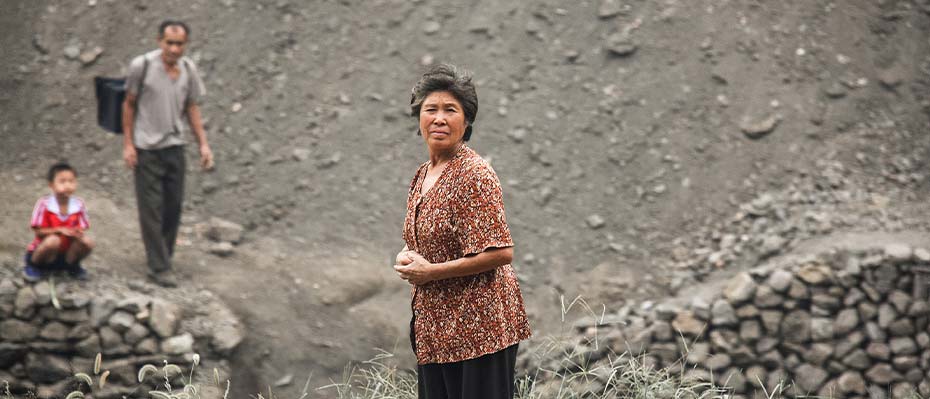
The perseverance of North Korean Christians is not only a story of tragedy—it is a message of awakening to the world. They remind us what true Christianity is: not comfort, but commitment; not popularity, but persecution; not safety, but sacrifice.
Their example calls every believer across the globe to examine their own faith:
- Would we still follow Christ if it meant losing everything?
- Would we treasure one page of the Bible if it were the only one we had?
- Would we pray if every word could cost us our lives?
Their lives preach louder than any sermon ever could.
3. Faith Under Fire: Stories of Courage, Martyrdom, and Miracles in North Korea
In North Korea, faith in Jesus Christ is not a matter of choice; it is a matter of life and death. To follow Christ in that nation means to live under constant fear, to survive without freedom, and to worship in silence. Yet, even in the midst of such extreme darkness, there are people who continue to believe, to pray, and to hope. Their stories are not written in newspapers or broadcasted on television. They are written in tears, in whispers, and in the quiet devotion of hearts that refuse to deny the Lord.
Across the countryside, thousands of Christians live as fugitives in their own homeland. They hide in mountains, forests, or near the Chinese border to escape the eyes of the secret police. Many of them have been born into underground Christian families who have passed down the faith from generation to generation. These believers cannot meet openly, sing hymns aloud, or even mention the name of Jesus outside their homes. The only sound that carries their prayers is the silence of the night, where hope and fear exist together.
Those who are discovered are often sent to political prison camps. These camps are among the harshest places on earth. Prisoners are forced to work long hours with little food, in freezing temperatures, and under constant watch. Many are beaten, tortured, or killed for refusing to renounce their faith. In some camps, prisoners are executed when a Bible is found in their possession. Yet even there, some whisper verses of Scripture to one another, encouraging others not to give up.
There was a man who was imprisoned for hiding a small New Testament that he had received from a missionary years before. The guards discovered it and demanded that he deny Christ. He refused. For that, he was punished severely and made to stand outside in the cold until he could no longer move. His last words were a quiet prayer for forgiveness and strength. His death became a testimony to those who witnessed it, a reminder that faith can endure even when the body cannot.
There are families who secretly gather to pray before meals, even when there is nothing on the table. They thank God for survival, for one another, and for the hope that cannot be taken away. They know that any moment could be their last, but they continue to live as believers because they have already given their lives to God. Their strength comes not from the promise of deliverance, but from the assurance that Christ is with them in their suffering.
The North Korean regime teaches its citizens to worship their leaders as gods. Schools, media, and propaganda constantly repeat that the nation’s rulers are the saviors of the people. Children are trained to inform the government if they suspect anyone of believing in God. In this environment, Christian parents must be careful not to speak openly about their faith, even to their own children. They teach the truth through coded stories, through quiet example, and through acts of kindness that reflect the love of Christ without words.
Despite this constant threat, the Christian community in North Korea has continued to grow quietly. It is estimated that tens of thousands of believers live in secret today. They have learned to share their faith through trust and sacrifice. When one person finds another who believes, they become family. They share food, verses, and prayers, often at great personal risk. For them, fellowship is not about comfort; it is about survival.
Sometimes miracles happen. A smuggled radio broadcast from South Korea or China might carry a sermon or hymn across the border. Someone hiding in a dark room hears the gospel for the first time and believes. There are reports of people finding pages of the Bible washed up by rivers, reading them, and coming to faith. Even in a land of oppression, the Word of God continues to move in ways that no government can stop.
Many who escape North Korea later testify that they had seen God’s hand protecting them. Some describe moments when guards looked directly at them yet failed to see the hidden Bible they were carrying. Others speak of finding food in miraculous ways when they were starving in the wilderness. These stories are told quietly, but they reveal a truth that has never changed: the power of God is greater than the power of fear.
The faith of North Korean believers is not based on convenience. It is a faith refined by fire, a faith that holds fast even when every human reason says to give up. Their lives are a living sermon to the world—a testimony that following Jesus is not about comfort, but about conviction. The cost they pay daily challenges every Christian around the world to examine their own faith. Do we value our freedom to worship? Do we use the opportunities we have to speak truth while others suffer in silence?
In the midst of darkness, their faith continues to shine. The underground believers of North Korea live as a reminder that no wall, no government, no chain can separate a person from the love of Christ. The world may not know their names, but heaven knows every one of them. Their prayers rise from prison cells, hidden homes, and frozen fields, and they reach the throne of God. Their strength is not in numbers, but in the power of the cross—the same cross that once stood on a hill called Calvary and still gives hope to every heart that believes.
4. Standing with the Suffering Church: How the World Can Support Believers in North Korea
When one part of the body of Christ suffers, the whole body suffers with it. This truth from 1 Corinthians 12:26 is not a poetic expression but a living call for every Christian to rise in compassion and action. The believers in North Korea are not distant strangers; they are our brothers and sisters, bound to us by the blood of Christ. Though the borders are closed and the walls are high, our prayers and our love are not limited by geography or politics. The suffering Church in North Korea reminds us that Christianity was never meant to be comfortable—it was meant to be courageous.
The first and most powerful response of the global Church is prayer. Prayer is not weak or symbolic—it is the divine weapon that moves mountains and breaks chains unseen. While we may not be able to stand physically beside them, we can kneel in intercession. When the early church prayed for Peter in prison, God sent an angel to open the doors (Acts 12:5–10). In the same way, our faithful prayers can bring comfort, hope, and even deliverance to those behind the walls of persecution. Every time we whisper their names before God, heaven listens.
Christians around the world should pray specifically for the believers in North Korea—for strength in their faith, for provision in their need, for safety amid danger, and for boldness to stand firm. Pray that the Holy Spirit would comfort those who have lost family members, that He would bring light into the dark prisons, and that the gospel would continue to spread secretly among the people. Pray for the leaders of North Korea—that their hearts may be softened and their eyes opened to the truth of the living God.
The second way we can help is through awareness and advocacy. The world often forgets North Korea’s silent church because its voice cannot be heard. Yet as believers living in free nations, we can become their voice. Churches, ministries, and individuals can share their stories, raise awareness about their suffering, and encourage others to pray and act. Writing to government representatives, supporting human rights campaigns, and spreading truthful information about the persecution in North Korea helps bring light to a nation trapped in darkness. Awareness is not political—it is spiritual obedience to the command to “remember those in bonds, as bound with them” (Hebrews 13:3).
Financial support is another lifeline. Many Christian organizations work underground or through border ministries to send aid—such as food, medicine, and Bibles—into North Korea. These resources are often smuggled at great risk, but they bring hope to believers who have nothing. Supporting such missions is not merely charity; it is fellowship. It is standing shoulder to shoulder with those who suffer for Christ. When we give to these ministries, we are participating in the work of the gospel where we cannot personally go.
In addition to external aid, the Church must also offer spiritual solidarity. North Korean Christians must know that they are not forgotten. Messages of encouragement, testimonies of faith, and letters of support sent through ministries that can deliver them remind persecuted believers that they are part of a great and living family. These small acts of love can reignite courage in weary hearts and remind them that Christ’s Church stands united.
The Church must also learn from their endurance. The courage of North Korean believers teaches us the true meaning of discipleship. They remind us that Christianity is not defined by comfort, convenience, or cultural acceptance, but by obedience, faith, and sacrifice. We must ask ourselves: would we stand firm if the same darkness surrounded us? Would we still proclaim Christ if it cost us everything? Their faith challenges us to live bolder, pray deeper, and walk closer to God.
Moreover, we must equip future generations with awareness and compassion. Pastors, Bible teachers, and parents should teach about the persecuted Church, including North Korea, not as a distant tragedy but as a vital part of the Christian story. Teaching young believers to intercede, to give, and to care builds a stronger, more united global body of Christ—one that understands that freedom is a privilege meant to serve others, not ourselves.
Finally, as we stand with the persecuted, we must not lose sight of the gospel’s ultimate hope. The day will come when no government can silence prayer, when no prison can hold believers, when no regime can hide the truth. The message of Christ will prevail, as it always has, because the power of the resurrection is stronger than the power of oppression. The tears of North Korean believers are not forgotten by God—they are seeds of revival that one day will bloom in freedom and joy.
Every believer around the world has a role to play in this story. Some are called to go, some to give, some to pray, and all to care. The Church is strongest when it stands together—when it feels the pain of others as its own and acts with compassion that mirrors the heart of Christ. The world may ignore North Korea’s silent Church, but heaven never will. And as long as heaven listens, we must continue to pray, to love, and to act.
5. The Hope Beyond the Darkness: God’s Unstoppable Work in North Korea
Even in the darkest night, the stars still shine. In the same way, amid the iron walls of North Korea’s persecution, the light of the gospel continues to burn—quietly, faithfully, and powerfully. Though unseen by human eyes, God’s hand is at work behind those walls. The Church in North Korea is not dead; it is alive, hidden like gold beneath the earth, purified through fire and suffering. What the enemy meant for destruction, God is using for redemption.
From the outside, North Korea may appear to be a place where hope is impossible—a nation built on fear, surveillance, and total control. Yet history and Scripture remind us that no nation, no government, and no dictator has ever been able to silence the voice of God. In ancient Egypt, Israel groaned under slavery, but God raised up Moses. In Babylon, Daniel prayed even when prayer was outlawed. In Rome, Christians worshiped in catacombs while emperors burned them alive. And in North Korea today, that same spirit of faith lives on in hidden homes, underground tunnels, and whispered prayers.
The power of God’s Kingdom is not measured by visibility or numbers—it is measured by endurance, obedience, and love. Every believer in North Korea who refuses to deny Christ is preaching a sermon stronger than any pulpit. Their silence speaks louder than the propaganda of fear. Their tears water the seeds of revival that one day will bloom across their land.
When Jesus said, “I will build my Church; and the gates of hell shall not prevail against it” (Matthew 16:18, KJV), He was not giving a metaphor—He was declaring an eternal truth. The gates of hell in North Korea, no matter how heavily guarded, will one day fall. The same God who opened the prison doors for Peter, who freed Paul and Silas through praise, is still the God of power and deliverance.
The Church worldwide must not only pray for North Korea, but also learn from it. In a world of comfort and distraction, North Korean believers show us what genuine faith looks like—faith that stands when everything else falls, faith that clings to Christ when life itself is at stake. Their courage is a mirror reflecting our own spiritual condition. If they can worship in silence, can we not worship in freedom? If they can love their enemies under threat of death, can we not forgive ours in daily life?
The Call for Global Christians
- Pray continually – not as a habit, but as warfare. The prayers of the righteous are powerful and effective (James 5:16).
- Give generously – support ministries that reach North Koreans with food, medicine, and the Word of God.
- Speak boldly – be a voice for those who have none. Tell their stories. Share their faith.
- Live faithfully – let their endurance inspire your obedience.
One day, the walls will fall. The sound of worship will rise openly across the land where silence once ruled. Churches will be rebuilt, families reunited, and the gospel proclaimed freely in the streets of Pyongyang. Until that day comes, we stand as one family under one Lord—waiting, praying, and believing that the Lamb who was slain is worthy to receive the reward of His suffering.
Q1. Why is North Korea the most dangerous country for Christians?
Because Christianity is viewed as a threat to the government’s authority. Believers are often imprisoned, tortured, or killed for owning a Bible or worshiping secretly.
Q2. How can we pray effectively for North Korean believers?
Pray for courage, protection, spiritual growth, and for the gospel to spread even under oppression. Pray for God to touch the hearts of the leaders.
Q3. Are there still Christians inside North Korea today?
Yes. Despite persecution, estimates suggest tens of thousands of underground believers remain faithful, worshiping secretly and risking their lives for Christ.
Q4. How can I help North Korean Christians?
Support organizations providing aid, advocate for religious freedom, and keep them in daily prayer. Share their stories to awaken others to their plight.
If this message stirred your heart, take a moment to pray now for North Korea. Share this article to raise awareness, and visit GraceToGospel.com to learn how you can partner in prayer and outreach for persecuted believers worldwide. Let us be the generation that stands with those who cannot stand alone.