The Seven Key Events of Good Friday –
A Deep Dive into the Path of Redemption
Introduction
Good Friday is not just a tragic historical event. It is the turning point of eternity, the sacred hinge on which heaven and hell, sin and salvation, judgment and mercy all pivot. On this day, Jesus Christ—the Son of God—willingly embraced betrayal, injustice, suffering, and death. Why? To redeem humanity from sin and reconcile us to God. This article explores the seven key events of Good Friday in profound depth, revealing their theological, historical, emotional, and spiritual significance.
1. The Betrayal and Arrest of Jesus – The Kiss of Treachery
(Matthew 26:47–56; John 18:1–11)
Jesus spent His final moments of freedom praying in Gethsemane, deeply sorrowful, overwhelmed with the burden of sin He was about to bear. As He prayed, Judas Iscariot—a disciple turned traitor—approached with Roman soldiers and temple guards. His betrayal was sealed with a kiss, the most intimate of greetings turned into a symbol of treachery.
The arrest of Jesus highlights human weakness and divine resolve. While the disciples fled in fear, Jesus stood firm, not as a victim of circumstance, but as the sovereign Savior who chose to suffer. This moment wasn’t accidental; it fulfilled prophecies (Psalm 41:9) and initiated the final journey to the cross.
2. The Religious Trials – Condemned by the Keepers of the Law
(John 18:12–24; Matthew 26:57–68)
Jesus was taken to Annas and then Caiaphas, the high priest. These religious trials were illegal, rushed through the night, and filled with false witnesses. The leaders sought a reason to condemn Jesus, not justice.
Jesus’ silence during these trials echoes Isaiah 53:7 – “He was oppressed and afflicted, yet He did not open His mouth.” Though falsely accused, He remained dignified and unshaken. Ironically, the very men who awaited the Messiah were the first to reject Him when He stood before them.
Their judgment was not a search for truth, but a manifestation of fear—fear that Jesus would disrupt their power, influence, and status quo.
3. The Roman Trials – Politics over Principle
(Luke 23:1–25; John 18:28–19:16)
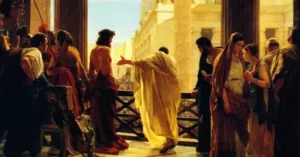
Jesus was presented before Pontius Pilate and Herod. Pilate, recognizing His innocence, tried to release Him. Yet, fearing the crowd’s wrath and political repercussions, he capitulated.
Herod, curious but indifferent, mocked Jesus and returned Him to Pilate. Though Pilate found no fault in Him, he scourged Jesus and handed Him over to be crucified. In washing his hands, Pilate tried to absolve his guilt—but guilt cannot be washed with water.
This episode reflects how truth is often sacrificed on the altar of convenience. Jesus, the Truth (John 14:6), stood silent while lies prevailed.
4. The Scourging and Mockery – The King of Suffering
(Matthew 27:26–31; Isaiah 53:5)
Before the crucifixion came the scourging—a brutal beating with a flagrum, a whip embedded with bones and metal. Jesus’ back was torn, muscles exposed, blood pouring.
He was then mocked by Roman soldiers. A crown of thorns was forced upon His head, a purple robe draped on His shoulders, and insults hurled like daggers. “Hail, King of the Jews!” they sneered, not realizing they mocked the King of kings.
Every lash fulfilled Isaiah 53:5 – “By His stripes, we are healed.” The physical agony was immense, but even more unbearable was the spiritual suffering—the Holy One bearing the sin of the world.
5. The Journey to Golgotha – Bearing the Cross
(John 19:17; Luke 23:26–31)
Exhausted and mutilated, Jesus was forced to carry His cross through the Via Dolorosa—the Way of Suffering. Each step was a testament of love. When He stumbled, Simon of Cyrene was conscripted to help.
Along the way, Jesus comforted the weeping women of Jerusalem. Even in pain, His heart burned with compassion. This journey was not just a march to death—it was a walk of triumph, the Lamb of God bearing the sins of the world.
Golgotha—“The Place of the Skull”—became the altar of sacrifice where heaven met earth and love conquered hate.
6. The Crucifixion – Nailed to the Cross
(Luke 23:33; John 19:18)
At Golgotha, Jesus was nailed to a wooden cross—hands and feet pierced, body lifted, exposed to the mocking crowd. Crucifixion was a Roman method of execution reserved for the worst criminals. For Jesus, it was the appointed way to atone for sin.
Each hammer strike echoed the weight of human sin. Yet Jesus did not call down angels or curse His executioners. Instead, He offered forgiveness, fulfilled prophecy, and bore the wrath of God meant for us.
The cross stands as history’s greatest paradox: the place of death that brings life, of curse that brings blessing, of defeat that secures victory.
7. The Seven Last Words – The Heart of God Revealed
(Luke 23:34-46; John 19:26-30)
Jesus’ final words from the cross are windows into His soul and the mission of redemption:
1. “Father, forgive them…” (Luke 23:34) – The cry of divine mercy. 2. “Today you will be with Me in Paradise.” (Luke 23:43) – The promise of immediate salvation. 3. “Woman, behold your son…” (John 19:26–27) – Compassion even in suffering. 4. “My God, My God, why have You forsaken Me?” (Matthew 27:46) – The agony of separation. 5. “I thirst.” (John 19:28) – The fulfillment of prophecy and physical anguish. 6. “It is finished.” (John 19:30) – The completion of atonement. 7. “Father, into Your hands I commit My spirit.” (Luke 23:46) – The ultimate surrender.
Each word is rich with theology and emotion. Together, they form the cornerstone of Christian faith.
Conclusion: The Meaning of Good Friday
Good Friday is not simply about suffering—it is about substitution. Jesus took our place. It is about sacrifice. Jesus paid our debt. It is about salvation. Jesus opened the way to eternal life.
As we reflect on the seven key events, we are reminded that this day changed everything. The cross, once a symbol of shame, has become a symbol of hope. The blood of Christ cries louder than the blood of Abel—it cries for mercy, not vengeance.
The darkness of Good Friday only magnifies the glory of Easter Sunday. But without Good Friday, there is no resurrection. Without the cross, there is no crown.
Let these truths not remain distant history but transform your heart today. The path Jesus walked invites us to die to sin and live in righteousness.
Discussion Questions:
- How do the trials of Jesus reflect the state of our own justice systems today?
- What does Jesus’ silence during His suffering teach us about divine strength?
- Why is “It is finished” one of the most powerful declarations in history?
- How can we apply the seven last words of Jesus in our personal walk with God?
- What does it mean to take up your cross daily, in light of Good Friday?
Explore the seven profound events of Good Friday in deep detail—from Jesus’ betrayal to His crucifixion and last words. A powerful 1000+ word Christian article that unveils the heart of the Gospel through Scripture, history, and spiritual reflection.
May the grace and love of God remain with you always.
Please don’t forget to comment and share this message.
Written by: Niwas Thapa | gracetogospel.com