Amid growing global concern over the persecution of Christians in Nigeria, U.S. President Donald Trump issued a powerful warning, sparking international debate about faith, freedom, and justice. This article explores what the warning means for believers, governments, and the spiritual battle between truth and tyranny. Discover how the cross still stands strong amid global chaos — and why this message matters now more than ever.
When Faith Faces Fire — The Voice That Shook the World
In a world already divided by politics, religion, and power, one statement has echoed beyond borders — a warning from the White House to the heart of Africa.
President Donald Trump recently spoke with boldness, declaring that “if Nigeria’s government does not stop the killings of Christians, America will take serious action.”
His words were not just political rhetoric; they were a thunder that awakened millions who had grown silent under the weight of fear and injustice.
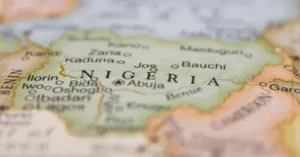
Across villages and cities in Nigeria, believers have lived in constant danger — churches burned, families displaced, faith tested.
While global leaders often speak in silence, Trump’s voice came like a storm — forcing the world to look again at what it had long ignored: the suffering of God’s people.
But this warning is not just a geopolitical statement — it carries a spiritual dimension.
It reminds us that the battle for justice is also the battle for souls.
When leaders rise to defend faith, they unknowingly step into the age-old struggle between light and darkness, truth and deception, Christ and the enemy of souls.
Today, as the world listens, one question rises above the noise:
👉 Will the nations finally stand for truth — or continue to turn away from the cries of the persecuted?
The Pain of the Persecuted — Voices from Nigeria
Across the green fields and crowded villages of Nigeria, the cry of the persecuted has become the sound of a silent storm. While the world scrolls through social media and debates politics, thousands of Christian families live each day wondering if they will survive another night.
In the northern regions of the country, where extremist violence has escalated over the years, churches have been burned, pastors have been executed, and children have been orphaned. According to humanitarian reports, more than 45,000 Christians have been killed in Nigeria since 2009, and over 18,000 churches have been destroyed or abandoned. These numbers are not statistics — they are stories of faith under fire.
A young woman named Mary (name changed for security reasons) shared through a mission report,
“They came at night, shouting that we must deny Christ or die. My husband refused, saying, ‘Jesus is Lord.’ They shot him in front of me. But even as I cried, I felt peace — because I knew he was not lost, but home with the Lord.”
Her story echoes the faith of thousands. These are not merely victims; they are living testimonies of unshakable belief in the face of unimaginable darkness. They remind the world that faith is not comfort — faith is conviction.
The World Watches — and Responds
President Trump’s warning did not arise in isolation. For years, human rights organizations, Christian aid groups, and faith-based media have raised alarms about Nigeria’s worsening situation. The U.S. State Department, during both previous and current administrations, listed Nigeria as a “Country of Particular Concern” due to severe violations of religious freedom.
Trump’s declaration, “If Nigeria’s government does not stop the killings, we will take action,” sent ripples across the international community.
Some hailed it as a long-overdue stand for justice, while others questioned its geopolitical implications. Yet beneath the politics lies a more important truth — the call for global moral responsibility.
Churches around the world began to respond. In London, believers held prayer vigils outside embassies. In Brazil, thousands gathered to intercede for persecuted Christians. Across Asia and Africa, pastors preached about the cost of faith and the courage of those who suffer silently.
The message spread like a sacred fire: “When one part of the Body of Christ suffers, we all suffer.” (1 Corinthians 12:26)
Faith Under Attack — But Not Defeated
Despite the constant attacks, faith in Nigeria is not dying; it is growing stronger.
The underground churches continue to meet in secret, whispering hymns of hope. Children recite verses by candlelight. Mothers pray through the night, covering their sons and daughters with words of protection.
One pastor in Plateau State said,
“They burn our buildings, but they cannot burn our belief. Every time they destroy a church, ten more rise.”
This resilience mirrors the early church in the Book of Acts — persecuted, yet powerful; hunted, yet holy. It’s as if history repeats itself, reminding us that the blood of the martyrs is still the seed of the church.
In a global age where faith is often mocked and morality redefined, the Nigerian church stands as a prophetic sign — that true Christianity cannot be destroyed by fire or fear.
A Global Call to Conscience
The persecution in Nigeria is not only Nigeria’s problem — it is the world’s moral test.
If powerful nations remain silent, if believers choose comfort over compassion, then the essence of our faith fades. The call of the Gospel is not merely to preach, but to stand with the suffering.
Trump’s statement — whether political or spiritual — has reopened an ancient question for the modern world:
👉 Will we defend the cross only in words, or also in action?
Churches, NGOs, and governments must rise together — not with weapons of war, but with the power of truth, aid, and advocacy. It is time for global believers to unite in prayer and purpose, declaring once again:
“We will not be silent while our brothers and sisters bleed.”
The Hidden Strength of the Cross
The story of Nigeria’s Christians is not one of defeat, but of divine strength.
While their homes may burn, their hope does not.
While their voices may tremble, their faith stands firm — rooted in the promise of a Savior who once said,
“Blessed are those who are persecuted because of righteousness, for theirs is the Kingdom of Heaven.” (Matthew 5:10)
Every tear shed in those villages, every cry uttered in the night, is heard by the God who sees all.
And perhaps, that is what the world is being reminded of through this crisis —
that faith still matters,
that truth still stands,
and that Christ still reigns, even in the ashes of suffering.
| Theme | Description |
|---|---|
| Christian Persecution in Nigeria | Ongoing violence has killed tens of thousands and displaced millions. |
| Trump’s Warning | A call for action and accountability against religious oppression. |
| Global Response | Churches and believers worldwide uniting in prayer and advocacy. |
| Faith’s Resilience | Despite danger, Christianity continues to grow stronger. |
| Spiritual Meaning | The battle is not only political but deeply spiritual — a test of faith and compassion. |
Between Politics and Providence — Can Faith Bring Peace to a Broken World?
The story of Nigeria’s persecution is not just about politics or human suffering. It is a mirror that reflects something deeper about the soul of our generation. The tension between power and compassion, between national interest and divine purpose, has never been more visible. When one nation cries for help and another holds the power to act, the question becomes larger than governments. It becomes a matter of conscience.
Every era of history has faced this question in one form or another. When injustice rises, when the weak are crushed, when the faithful are silenced, heaven always searches for those who will stand for truth. Political leaders can influence the course of nations, but it is only the hand of God that can heal the wounds of hearts. That is why this moment demands not only diplomacy but prayer; not only strategy but surrender to divine will.
In the corridors of power, decisions are often guided by calculation. In the heart of faith, decisions are born out of conviction. The two rarely walk together. Yet, when a leader speaks in defense of the persecuted, knowingly or unknowingly, he becomes a vessel of a higher purpose. Whether motivated by politics or compassion, such a stand reminds the world that truth cannot forever be buried beneath silence.
The call for justice in Nigeria echoes the words of the prophets who cried out for the oppressed. It is not enough to condemn violence; the world must rediscover what righteousness means. The Bible does not separate justice from mercy, or government from morality. A nation that fears God upholds both. When power forgets compassion, it becomes tyranny; when faith forgets truth, it becomes empty religion.
If peace is to come to Nigeria, it will not begin in conferences or policies. It will begin in the hearts of those who still believe that light can overcome darkness. Political stability without spiritual renewal is fragile. Nations can build walls, but only God can build peace. Peace is not the absence of war; it is the presence of righteousness. It flows from hearts that have been reconciled to God and to one another.
In every persecuted believer, the world is reminded that faith is not convenience but courage. They do not stand because it is safe; they stand because truth is worth more than life itself. And perhaps that is the lesson God is teaching the global church through Nigeria’s pain — that the Gospel still has power, that the cross still divides and heals, that love still endures when kingdoms fall.
For the nations that watch, neutrality is no longer an option. Silence has a cost. The cries of the persecuted rise like incense before the throne of God, and those who hear must respond. To pray is not to be passive; it is to participate in heaven’s battle for justice. When believers kneel, they invite the kingdom of God to invade the affairs of men. The weapons of our warfare are not made of iron, but of faith, truth, and intercession.
If the world truly seeks peace, it must return to the One who is its source. No government, no president, no military can accomplish what only the Prince of Peace can do. True peace will come when hearts are humbled, when repentance replaces pride, when love replaces hatred, and when forgiveness replaces revenge.
In the ashes of persecution, God is building something that human eyes cannot yet see — a purified church, a courageous generation, a witness that will reach the ends of the earth. The tears of Nigeria’s believers are watering the seeds of revival. Though the world sees tragedy, heaven sees testimony.
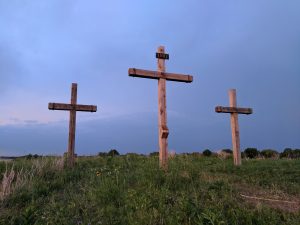
The cross still stands. It has stood through empires, revolutions, and centuries of blood and doubt. It stands again over Nigeria, over America, over every nation that wrestles between darkness and light. And as long as the cross stands, there remains hope — not the shallow hope of politics, but the eternal hope that God’s kingdom will come and His will shall be done on earth as it is in heaven.
Peace will not be built by the powerful alone, but by the faithful who refuse to stop believing. The world may be broken, but God has not abandoned it. Through faith, the broken can become whole, the persecuted can become pillars, and the forgotten can become the voices that change history.
This is the promise that sustains the church: that out of suffering will come strength, out of ashes will rise beauty, and out of persecution will emerge a people whose faith will shake the nations. When politics fails, providence remains. And in that divine providence lies the answer to every wound — the unchanging love of God that still reaches, still redeems, and still reigns.
The Cry of the Innocent — When Heaven Speaks Through the Blood of the Persecuted
The pain of the persecuted is not silent in the ears of God. Every tear that falls in Nigeria, every life lost for the sake of Christ, every family broken by violence — these are not forgotten in heaven. The Scriptures tell us that “the blood of Abel cried out from the ground,” and today the blood of countless innocent believers cries out in the same way. Their voices rise not in vengeance, but in testimony, declaring that truth cannot be silenced and that faith cannot be destroyed by fear.
When the world turns away, God does not. The cries of His people pierce through the noise of politics, media, and denial, reaching His throne with urgency. And when God hears, He moves — not always according to human timing, but always with divine precision. His justice may seem delayed, but it is never denied. Every injustice, every wound, every drop of innocent blood becomes part of a greater story — the story of redemption written through suffering.
Persecution, though cruel, is never meaningless. It reveals what comfort often hides — the depth of true faith. When believers in Nigeria, or anywhere else, choose to forgive their persecutors and continue to worship, they demonstrate the power of a Kingdom that no weapon can destroy. Their resilience is a living sermon to the world that love is stronger than death, and that the Gospel does not end at the cross — it begins there.
The persecuted are not victims; they are witnesses. Their courage convicts the comfortable and strengthens the weak. They remind us that Christianity was never meant to be a safe religion, but a surrendered life. The early church grew not through privilege but through persecution. The same fire that burned their homes purified their faith, and through them, the light of Christ spread across nations.
The same is true today. The suffering of believers in Nigeria is not the end of their story; it is the continuation of a divine pattern. Just as Christ’s suffering brought salvation to the world, so the suffering of His followers brings light to dark places. God never wastes pain. In His mysterious wisdom, He turns what the enemy means for evil into a testimony of His glory.
Those who suffer for Christ become part of a heavenly chorus — the same multitude seen in the book of Revelation, clothed in white robes, crying out, “Salvation belongs to our God.” Their reward is not earthly recognition, but eternal honor. And their faith, tested by fire, becomes the seed of revival.
To the watching world, it may seem that evil prevails. But heaven measures victory differently. God’s timeline is eternal. He allows persecution not because He is absent, but because He is preparing something greater — a purified church, a global awakening, and a witness that will reach every nation before His return.
And so the question for the rest of the world is not simply how to help Nigeria, but how to respond to the call that their suffering represents. Will we pray? Will we speak? Will we stand for truth when it costs something? The persecuted church calls us not to pity, but to partnership — to bear one another’s burdens and to remember that we are one body in Christ.
When one part suffers, the whole body feels it. And when one part stands firm, the whole body grows stronger. The courage of a believer in Nigeria today may be the reason another believer in America finds their faith tomorrow. That is the mystery of God’s kingdom — that what happens in secret, in sorrow, or in silence, can shake the nations.
Let the world hear what heaven already knows: that the blood of the righteous is never wasted. It is the ink with which God writes the story of redemption, the power that renews the church, and the testimony that will silence the lies of darkness.
And one day, when the King returns in glory, every tear will be wiped away, every injustice will be answered, and those who suffered will shine like the sun in the kingdom of their Father. Then the world will finally understand what Nigeria’s believers already know — that faith is not fragile, that love never fails, and that the cross still conquers all.
When the World Hurts — What We Must Learn from the Suffering of the Faithful
The pain of the persecuted church in Nigeria is not an isolated tragedy. It is a mirror held up to the conscience of the entire world. Their wounds speak louder than words. Their tears tell a story that our global generation often tries to ignore — a story of faith in fire, of love in loss, of hope that refuses to die.
In many places, comfort has replaced conviction. Entertainment has replaced worship. The faith that once changed empires has now, in many hearts, become silent and self-centered. But when we look at our brothers and sisters in Nigeria, something sacred stirs within us. Their suffering exposes our apathy. Their courage calls us to repentance. Their endurance teaches us what it truly means to follow Christ.
This is not just a Nigerian issue; it is a human issue, a spiritual issue, a global wake-up call. We are living in an age where evil has become bold and truth is being redefined. Where believers are being silenced, not only by persecution but by distraction. The world speaks loudly of progress, yet humanity is becoming spiritually impoverished.
The persecution of the righteous in Nigeria — and in many nations across Asia, the Middle East, and Africa — reveals that the battle between light and darkness is not over. The same hatred that nailed Christ to the cross still seeks to destroy His people. But what the world calls defeat, heaven calls refinement. These faithful ones, who suffer quietly in villages and cities unknown, are shaping eternity in ways the powerful can never understand.
Their cries should awaken the sleeping church in the West, in Asia, and across every continent. Because while they bleed for the Gospel, many of us live for comfort. While they cling to faith with their last breath, many of us trade it for convenience. Their fire must ignite ours. Their faith must rekindle ours.
This is the time for the global church to rise, not in anger but in compassion; not in political arguments but in prayer and unity. The persecuted do not need our pity — they need our partnership. They need us to intercede, to speak out, to give, and to stand. They need us to remember them in our gatherings, to raise their names before the throne of God, and to advocate for justice where it is possible.
But more than anything, they need us to live the Gospel that they are dying for. The world is watching how we respond. Will we remain silent spectators, or will we become active participants in God’s redemptive mission? Will we pray with tears, or scroll with indifference? Will we stand firm in truth, or blend into the noise of compromise?
The suffering church is not asking us to feel sorry; they are calling us to be strong. They are showing us that the real victory is not survival, but faithfulness. And if we listen, we will realize that their pain is preaching to us. It is telling us that comfort is temporary, that time is short, that eternity is near, and that love is the only force powerful enough to overcome evil.
The impact of this global suffering is both heartbreaking and holy. It reminds us that the Gospel is not just a message to be believed but a mission to be lived. If one part of the body is in chains, none of us are truly free. If one believer suffers, all believers must respond.
So, what must we do? We must pray — not as a ritual, but as a battle cry. We must give — not out of guilt, but out of gratitude. We must speak — not in fear, but with faith. We must live — not as those who seek safety, but as those who carry the cross.
The world is being shaken, but God’s purpose stands unshaken. He is calling His people to deeper faith, stronger unity, and fearless love. The persecution in Nigeria, and in every nation where believers suffer, is shaping the next great movement of God. Out of ashes will come revival. Out of sorrow will come songs of victory. Out of brokenness will come a church that walks not in pride, but in power.
The world may wound, but God heals. The nations may tremble, but His kingdom will never fall. The faithful who suffer today are the heroes of heaven tomorrow. And if we join them in prayer, in compassion, and in obedience, then their pain will not be in vain — it will become the seed of awakening across the earth.
Let the world learn this: that faith cannot be destroyed, that love cannot be silenced, and that the God who walks with the persecuted still reigns over history. And let us, the global body of Christ, not just watch from afar, but walk with them — until the day when every tear is wiped away and every voice joins in one eternal song: “Worthy is the Lamb who was slain.”
A Cry for Revival, A Call to Action, and the Message of Redemption
The story of Nigeria’s suffering church is not a headline to be forgotten — it is a divine message to every heart that believes in the living God. In their tears, we see courage. In their loss, we see faith. In their silence, we hear the voice of heaven calling the global church to awaken.
This is not merely about one nation’s pain, but about the world’s spiritual condition. The persecution of the faithful reveals how far humanity has drifted from truth, compassion, and holiness. Yet, even in the midst of sorrow, there shines a radiant hope — Christ Himself, the Savior who bore the world’s suffering on His cross and triumphed over sin and death.
1. Summary: The Message Beyond the Pain
From the first cry of injustice to the global response of faith, we have witnessed that persecution cannot destroy God’s purpose. Nations may fall, but the Gospel stands forever. The persecution in Nigeria is awakening the global church, reminding believers that Christianity is not comfort, but commitment; not luxury, but loyalty.
Every drop of innocent blood cries out for justice, but even louder, it cries out for mercy. God is not silent. He is refining His people, preparing His bride for the coming glory. What the enemy means for destruction, God is using for revival.
2. The True Lesson for the World Today
The pain of one nation reveals the soul of all nations. In a world that boasts of progress yet hides its moral decay, the persecuted believers teach us that faith without sacrifice is empty. They remind us that peace is not achieved through politics, but through prayer and purity of heart.
The modern world needs to learn again what the early church lived — that following Christ means carrying the cross. When believers stand firm in persecution, they preach the Gospel louder than any sermon.
3. What We Must Do Now — A Global Call to Action
The time for silence is over. The time for compassion has come.
- Pray earnestly for the believers in Nigeria and every persecuted nation.
- Support through trusted Christian organizations that provide aid, shelter, and Bibles.
- Speak boldly against injustice in truth and love, wherever you have a voice.
- Live faithfully in your own community, so the light of Christ shines through your life.
- Forgive and love even when it hurts, for this is the power that conquers darkness.
Let our prayers rise not only as words but as warfare. Let our compassion become action. Let our comfort turn into courage. The global body of Christ must move together — one voice, one faith, one mission — until every heart has heard the message of salvation.
4. The Message of Redemption and Hope
Christ Jesus came into the world to save sinners — this is the foundation of all hope. The cross is not a symbol of defeat but of victory. The blood that was shed two thousand years ago still speaks today — of forgiveness, deliverance, and eternal life.
To the persecuted, God says: “You are not forgotten.”
To the comfortable, He says: “Wake up.”
To the world, He says: “Repent, for the Kingdom of Heaven is near.”
Salvation is found in no one else. Not in politics, not in power, not in programs — only in the person of Jesus Christ. His love heals what hatred breaks. His peace restores what war destroys. His Spirit strengthens what fear weakens.
And soon, He will return — not as a suffering servant, but as a reigning King. Then every injustice will be judged, every tear wiped away, and the faithful will shine forever in His glory.
- What can we personally do to support persecuted believers around the world?
- How does persecution purify and strengthen the global church?
- What lessons from Nigeria’s faithful can transform our own spiritual life?
- Are we willing to live out the Gospel even when it costs something?
- How can we make prayer for the persecuted a consistent part of our daily life?
Q1: Why does God allow persecution?
God allows persecution not because He is absent, but because He is working to purify His church and spread the Gospel. Through suffering, the truth shines brighter, and hearts turn back to Him.
Q2: How can believers in comforted nations help those suffering?
By praying, supporting trusted ministries, speaking out for justice, and living faithfully where they are. Prayer and partnership break the chains of silence.
Q3: What spiritual lesson can we learn from Nigeria’s church?
That faith is stronger than fear, and that true Christianity is measured not by comfort, but by courage and compassion.
Q4: Is persecution a sign of the end times?
Yes, it fulfills Jesus’ prophecy that believers would be hated for His name’s sake. But it also signals that revival and Christ’s return are drawing near.
May the Lord open our eyes to see beyond the pain of nations,
and our hearts to love beyond our borders.
May we carry the burdens of the persecuted in our prayers,
and walk humbly with the God who still reigns over every storm.
May the peace of Christ guard our hearts,
the power of the Holy Spirit strengthen our witness,
and the grace of the Father unite His church in love,
until every nation bows and every tongue confesses that Jesus Christ is Lord. Amen.