Good Friday:
Why Is the Day of Christ’s Death Called ‘Good’?
Meta Description:
Discover why Good Friday — the day Jesus Christ was crucified — is still called “Good.” Explore the deep theological, spiritual, and historical reasons that transform a tragic death into the greatest hope for humankind. meaningful reflection to help you understand the redemptive power behind the cross.
1. Introduction: A Paradox in the Name
Why would Christians refer to the day their Savior was brutally executed as “Good”? The very phrase “Good Friday” seems contradictory — an apparent oxymoron. The Messiah, betrayed, falsely accused, scourged, and crucified, suffered a horrific death, yet this day is commemorated with reverence and called “good.”
This mystery can only be understood by looking deeper into the spiritual, theological, and redemptive meanings that surround this day. This article will unpack the term “Good Friday” and explore how Jesus’ death became the greatest demonstration of love, justice, and victory.
2. The Etymology of ‘Good Friday’
The term “Good Friday” likely derives from the older sense of the word “good,” which used to mean “holy” or “pious.” Some believe it evolved from “God’s Friday,” similar to how “goodbye” comes from “God be with ye.” However, linguistically, “Good Friday” has stuck in Christian tradition as a day of divine significance, not because of what humans did to Jesus, but because of what God accomplished through that event.
3. The Spiritual Meaning: Love Through Sacrifice
3.1. The Ultimate Act of Love
John 15:13 says, “Greater love has no one than this: to lay down one’s life for one’s friends.” On the cross, Jesus demonstrated this highest form of love — agape — a love that is self-sacrificing and unconditional.
3.2. The Fulfillment of God’s Redemptive Plan
From the Garden of Eden to the foot of the cross, the Bible presents a unified narrative: God rescuing humanity. Jesus’ death was not an accident — it was foreordained. Isaiah 53 foretells a “Suffering Servant” who would bear the sins of many. Jesus willingly stepped into this prophecy.
3.3. Substitutionary Atonement
Christ bore the wrath of God on behalf of humanity. Romans 5:8 says, “But God demonstrates His own love for us in this: While we were still sinners, Christ died for us.” He took our place, bore our punishment, and paid the penalty for sin.
4. Theological Foundations: Why the Cross Was Necessary
4.1. The Problem of Sin
Sin separates us from God (Isaiah 59:2). In the Old Testament, the sacrificial system was put in place to cover sins temporarily. But Jesus came as the Lamb of God (John 1:29) to take away the sin of the world once and for all.
4.2. The Need for a Perfect Sacrifice
Jesus lived a sinless life, fulfilling the law perfectly (Hebrews 4:15). Only a perfect sacrifice could satisfy divine justice. He became the spotless Lamb who died in our place (1 Peter 1:19).
4.3. The Triumph of Divine Justice and Mercy
The cross is the place where justice and mercy meet. God did not overlook sin — He punished it fully in Christ — but He also provided a way of grace for us.
5. Historical Reflections: The Friday That Changed the World
5.1. Roman Execution, Divine Purpose
Crucifixion was the most brutal form of execution in the Roman Empire. Yet God chose this method to reveal His immense love and the weight of sin.
5.2. The Veil Was Torn
At the moment of Jesus’ death, the veil of the temple was torn from top to bottom (Matthew 27:51), symbolizing that access to God was now open to all — no longer limited to priests or rituals.
5.3. Darkness and Earthquake
The natural world reacted to Jesus’ death. Darkness covered the land (Luke 23:44–45), and an earthquake shook Jerusalem (Matthew 27:51), affirming that this was not just another execution — it was cosmic in significance.
6. How ‘Good’ Overcomes Tragedy
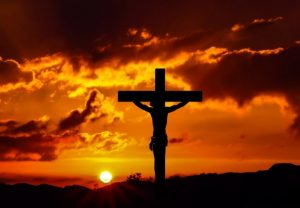
6.1. The Cross: A Symbol of Hope, Not Defeat
To the world, crucifixion meant defeat. But for Christians, the cross is a symbol of victory. Colossians 2:15 says Jesus “disarmed the powers and authorities” and triumphed over them by the cross.
6.2. Jesus’ Last Words Point to Redemption
From “Father, forgive them” to “It is finished,” Jesus’ words from the cross reflected a heart of love, surrender, and victory.
6.3. The Resurrection Seals the Goodness
Good Friday cannot be understood in isolation. The Resurrection on Easter Sunday proves that Christ’s death was not a failure — it was the beginning of life.
7. Why We Still Call It ‘Good’
- Because it was God’s plan of salvation: Acts 2:23 says Jesus was handed over by God’s deliberate plan.
- Because it demonstrates God’s love: Romans 5:8 highlights this love clearly.
- Because it brings life to humanity: 1 Corinthians 15:22 says, “For as in Adam all die, so in Christ all will be made alive.”
- Because the cross overcame evil: What Satan meant for evil, God used for eternal good (Genesis 50:20).
8. Modern-Day Reflections: What Good Friday Means for Us Today
8.1. A Call to Repentance and Renewal
Good Friday invites us to reflect on our sin, our need for grace, and our identity in Christ. It calls us to repent and believe in the Gospel.
8.2. A Day of Gratitude and Worship
Churches around the world mark this day with somber services, prayers, and fasting. Believers are reminded of the price paid for their salvation.
8.3. A Time for Evangelism
It’s also a powerful opportunity to share the message of Jesus with others. The cross is the most compelling story of love the world has ever known.
9. Beautiful Paradox: Good from Grief
Good Friday shows us how God can bring purpose from pain, hope from horror, and salvation from suffering. What seemed like the darkest day in history became the dawn of redemption.
“By His wounds, we are healed.” — Isaiah 53:5
10. Discussion Questions
- Why do you think God allowed Jesus to suffer such a brutal death?
- How does understanding the purpose of Good Friday change your faith?
- What does the cross mean to you personally?
- How can we share the message of Good Friday with others?
Final Blessing & Call to Action
May the grace and love of God be with you always.
If this article has spoken to you, don’t forget to share it, leave a comment, or contact us. Let the message of the cross reach more hearts!